20 August 2026
Gran Tierra Energy and Swisscontact Join Forces to Continue Strengthening the Cacao Sector in Putumayo, Benefiting 79 Rural Families in Puerto Asís
- As part of its ongoing commitment to rural development in Putumayo, Gran Tierra Energy is partnering with Swisscontact to increase productivity and create new income-generation opportunities for 79 cacao-producing families in Puerto Asís, all while prioritizing environmental conservation.
- The initiative will support the establishment of 100 new hectares of cacao under sustainable agroforestry systems, which integrates cacao cultivation with native tree species. This approach helps conserve natural resources, enhance biodiversity, improve soil health, and strengthen ecosystem resilience, while creating additional income opportunities for farming families in the region.
- The project will promote the participation of women, youth, and Indigenous communities, creating new opportunities throughout the cacao value chain.
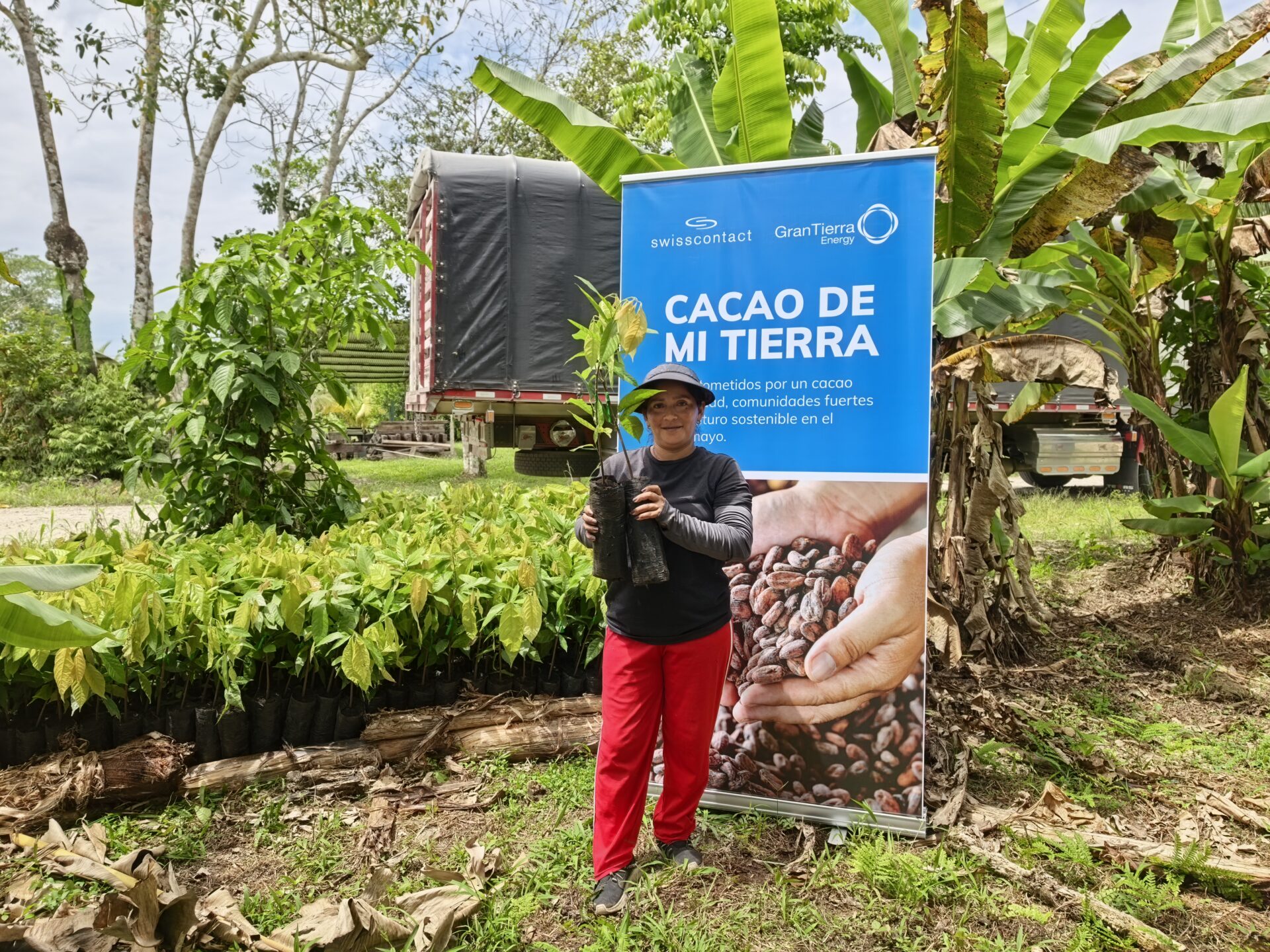
Puerto Asís, Putumayo – August 2026. As part of its continued efforts to support rural development and strengthen the cacao sector in Putumayo, Gran Tierra Energy and Swisscontact have launched Cacao de Mi Tierra, a new initiative that will benefit 79 cacao-producing families in the Puerto Vega-Teteyé corridor of Puerto Asís. Through the establishment of 100 new hectares of cacao under sustainable agroforestry systems, which combine cacao cultivation with native tree spaces, the project aims to promote more sustainable land management practices that contribute to environmental conservation, enhance biodiversity, improve soil quality, and strengthen ecosystem resilience. At the same time, the initiative will create new income-generation opportunities for farming families and support the long-term sustainability of cacao production in the region.
Participating producers will receive specialized technical assistance, business support, and organizational capacity building to help them implement more efficient, resilient, and competitive production practices. The project will also promote strengthened agricultural practices and provide training to improve cacao quality and productivity. In addition, the initiative will support local cacao organizations and prioritize better market access opportunities for producers. Special emphasis will be placed on encouraging the participation of women, youth, and Indigenous communities, contributing to a more inclusive and sustainable cacao sector in Putumayo.
Diego Perez-Claramunt, President and Country Manager of Gran Tierra Energy in Colombia, said: “Gran Tierra Energy supports the development of the cacao sector in Putumayo as a pathway to sustainable livelihoods, environmental conservation, and long-term peace. The Cacao de Mi Tierra initiative is part of that commitment, helping expand opportunities for cacao-producing families through sustainable production models that strengthen local economies while protecting the unique biodiversity of the Amazon region. Through long-term partnerships and targeted investments, we remain committed to creating lasting benefits for both producers and the environment.
Cacao de Mi Tierra is part of a long-term strategy where Gran Tierra has been developing and supporting the cacao sector across Putumayo over the past ten years. This project builds on previous investments that have strengthened producer organizations, improved technical capacities, and promoted sustainable production. Through this ongoing strategy, Gran Tierra Energy continues to support a more resilient, competitive, and sustainable cacao value chain in the region.
Enrique Maruri, Director of Swisscontact Colombia, stated: “Our goal is to support producers and their organizations in strengthening their technical, business, and commercial capacities so they can build a more competitive and sustainable cacao sector for the future.”
Through this new initiative, Gran Tierra Energy and Swisscontact reaffirm their commitment to sustainable rural development in Putumayo by supporting responsible production models that strengthen local economies, promote environmental conservation, and generate lasting opportunities for cacao-producing families.